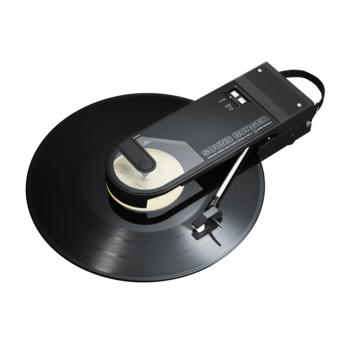
As you’ve probably guessed, turntables are the most commonly sought pieces of DJ’s Equipment. And as result, most of the questions we get here usually centered on “what to look for when buying the turntable”.
That’s why we’ve put together a few quick hits that should answer 90% of the questions you might have. Of course, if you have more specific turntable-related questions, please feel free to contact PlayDeRecord directly.
Pitch control is the first thing that you should consider when looking at a turntable, since it’s the one factor that will affect your sound the most if it isn’t working properly. When your pitch is set to zero, the turntable should spin at exactly 33 1/3 revolutions per second. A good turntable should have some sort of calibration device (usually a strobe) that allows you to verify the pitch.
It should also spin accurately at 78 & 45 RPM.
Additionally, there should be no wobble when the turntable is spinning. Test the pitch at different speeds. If you notice a wobble at any point, there may be a problem with your device.
Turntables usually spin using one of two mechanisms. And they each drive type has its pros and cons.
A belt-drive turntable will feature a motor on the side which attached to the platter using a belt. This spins the platter in a similar fashion that the chain on a bicycle spins the back wheel. Although these types of turntables are usually less expensive, they are more vulnerable to mechanical problems.
On the other hand, many will also argue that argue that a belt-driven turntable is better because it offers more accurate sound by minimizing motor interference.
Many higher-quality turntables will feature a direct drive mechanism, where the motor is directly connected to the platter. Although this is a bit more expensive, you will give you a smoother and more dependable pitch with fewer maintenance headaches.
The platter should be sturdy and wobble-free, but should also spin smoothly without making any noise. Noise can be a sign of wear or a problem with the bearings.
A sturdy platter is especially important if you plan on mixing and scratching, since this will place a lot of uneven pressure on the bearings... causing one side to wear faster than the other.
If you plan on scratching or mixing, avoid turntables with rubber or plastic gears that will wear out quickly. This is also why you’ll want to select a sturdy, brand-name system with a good reputation for quality.
Depending on your style, you may want to consider going completely digital. There are a number of software and hardware tools available today that make it very easy to scratch and makes music directly to your computer.
For someone just starting out with DJing, you might also want to consider an all-inclusive kit that contains headphones, 2 turntables and a mixer. This is much less expensive than purchasing each piece individually.